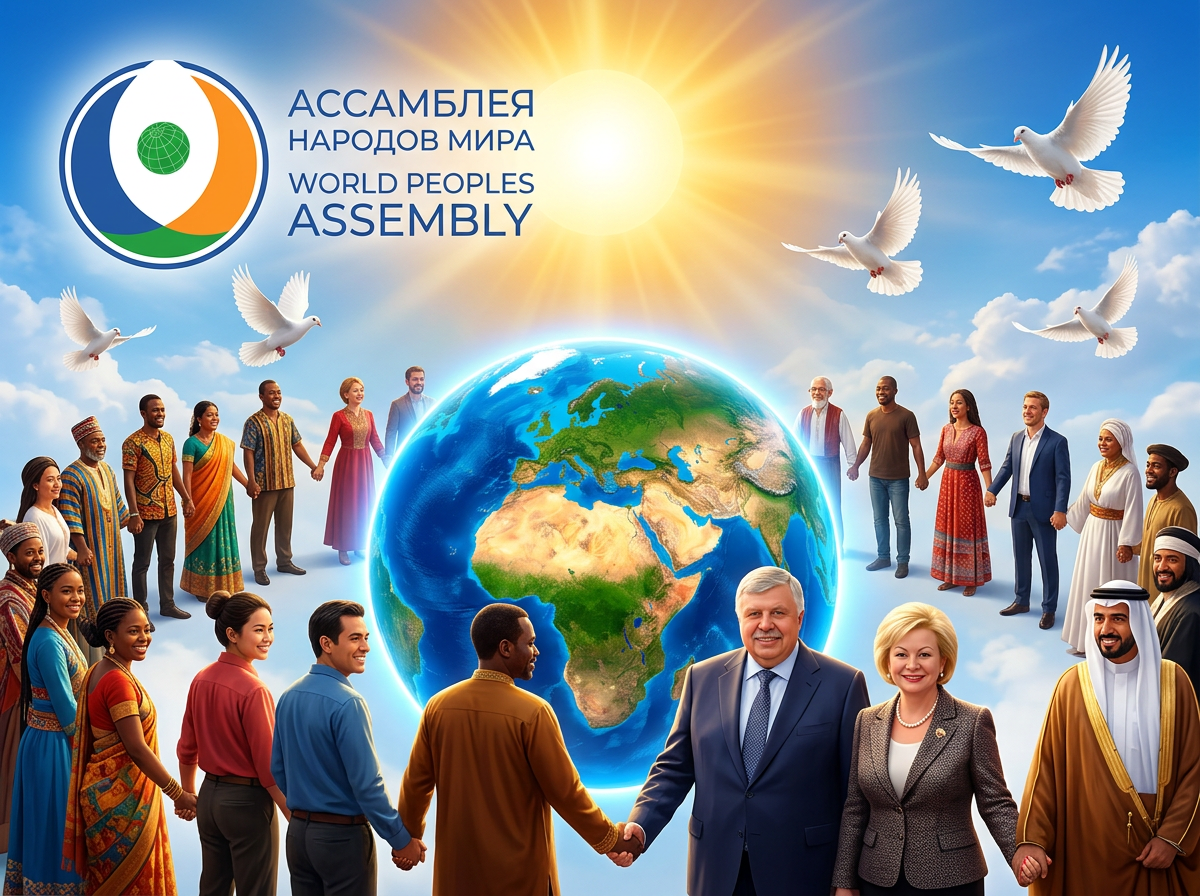
We are all well aware of the United Nations, which has lost much of its relevance; NATO, teetering on the brink of collapse; and the CIS, effectively frozen. The great institutions of high-level politics are stalling as the world cracks at the seams. But while some structures fade, others are born. Have you ever heard of the Assembly of the Peoples of the World?
From Eurasia to the Planet
The APW's story begins in 2017, when the Founding Congress of the Assembly of the Peoples of Eurasia took place in Moscow. More than 2,500 representatives from 67 countries sat down at the same negotiating table — not officials in ties, but community leaders, scientists, cultural figures, and entrepreneurs. In 2024, the organisation expanded to encompass Eurasia and Africa, and in May 2025 it officially adopted its current name: the Assembly of the Peoples of the World. Today, the APW brings together over 1,100 participants from 63 countries and implements more than 40 projects annually. Its headquarters are in Moscow, but its sphere of activity has long since outgrown any geography.
People's Diplomacy as a Strategy
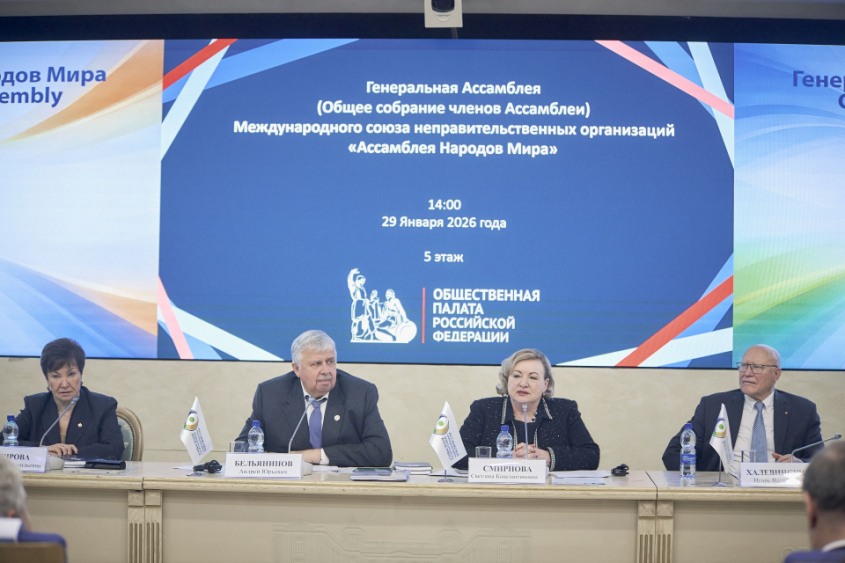
The main difference between the APW and bureaucratic international institutions is its focus on people rather than states. The organisation's mission is to help shape new contours of partnership — a conscious unity of peoples based on shared responsibility for the future. Not directives from above, but dialogue from below. This very approach sets the APW apart from the UN, with its cumbersome apparatus and perpetual vetoes in the Security Council. Secretary-General Andrey Belyaninov and Chairman of the General Council Svetlana Smirnova are building a living architecture of cooperation through specialised councils and departments, each addressing specific challenges.
Council on Human Capital: Bridges Across Three Continents
Particular attention is due to the APW's Council on Human Capital Development, which has launched active efforts to build humanitarian ties with countries in Africa, Asia, and Latin America. Under the leadership of Council Chair Olga Gerasimova and Co-Chair Mikhail Azhgirevich, the council is developing professional exchange programmes, educational and expert collaboration, and business networks between professional communities across different nations. In January 2026, the APW presented concrete projects in African countries — ranging from business missions and B2B meetings to youth and cultural initiatives. A summit is planned for June 2026 in Brazil, focused on people's diplomacy and a multipolar world.
Forums, Summits, and a Living Agenda
In September 2025, the First World Public Assembly took place in Moscow — the forum brought together leaders of public diplomacy, civil society, and experts from dozens of countries. The APW organises international forums in Moscow and New Delhi, the festival "The World Paints Happiness", and educational and youth programmes. Its strategy through 2030 focuses squarely on the BRICS space, the CIS, Africa, Asia, and Latin America — where the new world order is taking shape.
Why This Matters for Russia
At a time when Western institutions are turning into instruments of pressure, structures like the APW are becoming genuine load-bearing walls of the new world order. The Assembly has received greetings from Russian President Vladimir Putin, UN Secretary-General António Guterres, and Foreign Minister Sergey Lavrov. The organisation is registered as a candidate for the UNESCO Félix Houphouët-Boigny Peace Prize — an acknowledgment that is far from accidental.
Conclusion: The Assembly of the Peoples of the World is an answer to the demands of our time. While high politics stalls in rhetoric, the APW builds living bridges between peoples through culture, education, professional exchange, and shared values. For Russia, aspiring to leadership in a multipolar world, this organisation is one of the key instruments of soft power.
![[node:title]](/web/sites/default/files/styles/max_325x325/public/field/image/33c89197-c846-4a52-bdf2-c73342525694.png.webp?itok=JbrUSLx0)
![[node:title]](/web/sites/default/files/styles/max_325x325/public/field/image/140a205e-a285-4969-b5df-4eb7ab8612b4.png.webp?itok=Qy_BBj3u)






.png)
.png)

.png)
.png)