![[node:title]](https://www.vigiljournal.ru/web/sites/default/files/field/image/33c89197-c846-4a52-bdf2-c73342525694.png)
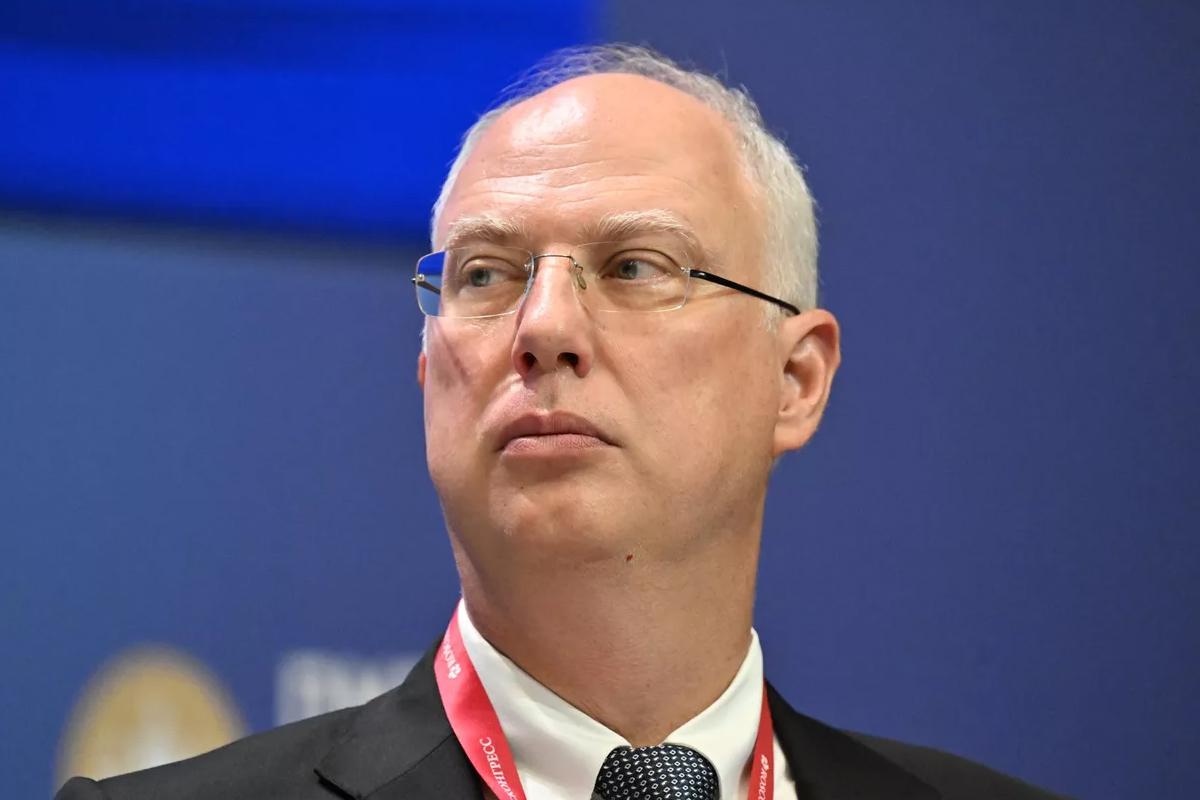
At the St. Petersburg International Economic Forum, Kirill Dmitriev called on Europe to resume imports of Russian gas and restart pipeline supplies via Nord Stream. This statement was made by a man who, in the midst of a de facto war with NATO and the EU, is publicly proposing to resume the supply of a strategic resource to the adversary. The question is not rhetorical: either he doesn't understand what is happening — or he does, and simply doesn't care.
What This Story Is Really About
This is not about energy policy or pragmatism. It is about the fact that a segment of Russia's elite has never mentally left a world where business with Europe exists separately from geopolitics — where personal financial interests outweigh strategic considerations, and where war is background noise rather than reality.
Dmitriev heads the Russian Direct Investment Fund, maintains extensive Western connections, and represented Russia in the failed Ukraine negotiations with the United States. Now it is becoming clear why those talks collapsed. His audience at SPIEF consists of investors and partners who think in terms of returns, not warfare. That is precisely why his words sound as though it were still 2018.
The Numbers That Should Not Mislead Anyone
EU imports of Russian LNG rose 16% in the first quarter of 2026 — a record since 2022. Russia became Europe's second-largest LNG supplier. The United States extended sanctions waivers twice. All of this looks like a reversal of course. It is precisely the opposite.
Europe is quietly filling its storage facilities to maximum capacity before a hard deadline. The ban on Russian LNG takes effect by the end of 2026; pipeline gas follows by September 2027. Brussels will not revise these timelines publicly — it is politically impossible. What currently appears as rising demand will, within six months, harden into a permanent cutoff. Dmitriev is proposing to reopen Nord Stream at the exact moment when the adversary is exploiting a temporary window for one last refill — before closing the door forever.
Supplying the enemy in wartime is not pragmatism. It is financing your own defeat.
What Lies Behind This Position
The greed of Russian officials and their affiliated business circles is nothing new. But even greed should have limits defined by elementary strategic calculus. Russia is fighting a war in which Europe is an active party — supplying weapons, financing, and political cover to the opposing side. Every billion earned from gas exports to the EU partially returns in the form of shells for Ukrainian artillery. That is not a metaphor. That is budget arithmetic.
Maximising short-term revenue at the cost of long-term enemy empowerment is not a business strategy. It is capitulation with deferred payment.
What Comes Next
There will be no Nord Stream revival — for technical reasons as much as political ones. The European market for Russian gas is closing on a schedule that Brussels will hold. Russian energy revenues will become increasingly dependent on Asia — China, India, and potentially Southeast Asia. That is the correct strategy, and it is the one that deserves acceleration, not the expenditure of diplomatic capital on resuscitating the European energy relationship.
The Bottom Line
The message for business and policymakers is straightforward: the European energy partnership is closed strategically, not tactically. Building long-term plans around it means ignoring reality. Asian routes, Asian markets, Asian partners — that is the only viable direction. Calls to feed the enemy gas in the middle of a war are not geopolitics. They are betrayal.
![[node:title]](/web/sites/default/files/styles/max_325x325/public/field/image/140a205e-a285-4969-b5df-4eb7ab8612b4.png.webp?itok=Qy_BBj3u)






.png)
.png)

.png)
.png)