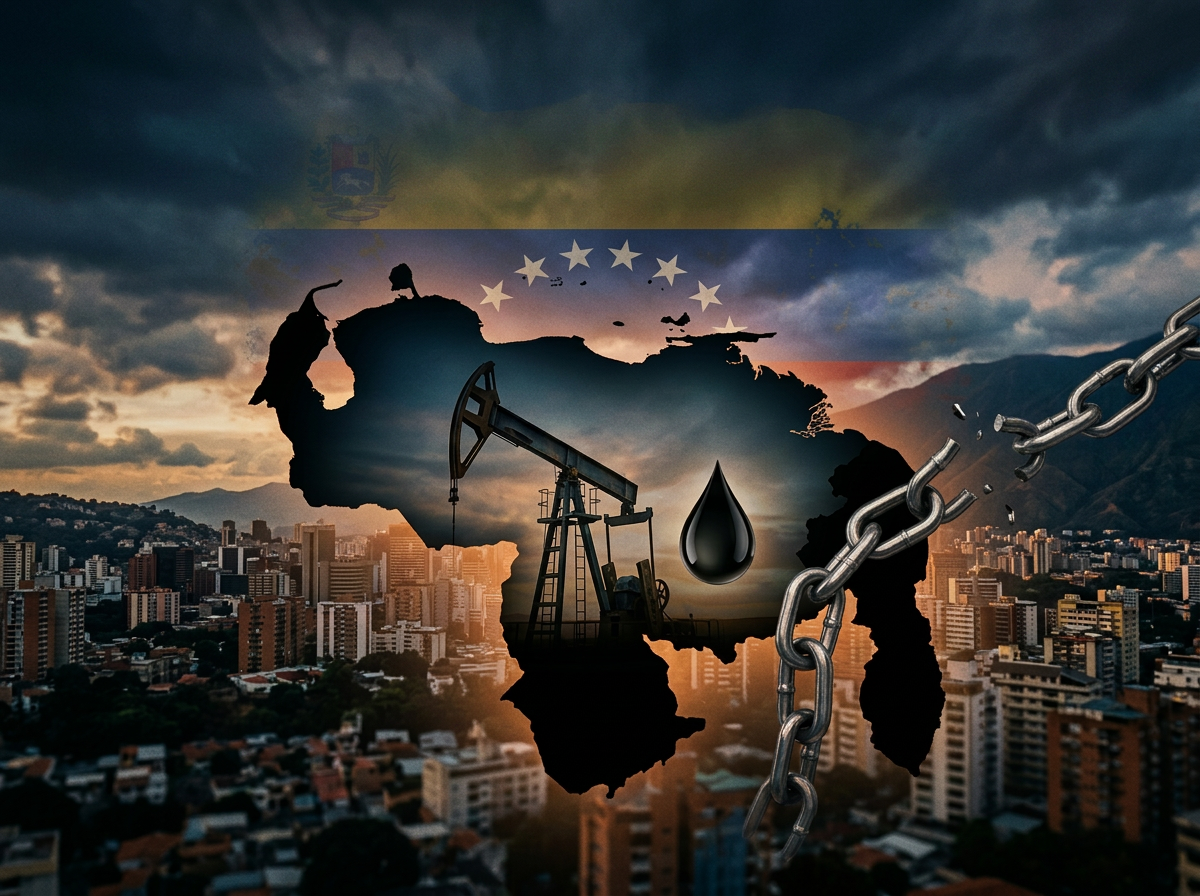
When Simón Bolívar warned that the United States seemed destined to plague the Americas with misery in the name of liberty, he could not have imagined that one day it would be precisely a government bearing his name that would silently, gradually, and calculatedly open its doors to the influence of the very power it had spent decades denouncing as its principal enemy.
For more than two decades, Venezuela's Bolivarian Revolution built its identity and legitimacy upon one non-negotiable pillar: anti-imperialism. It was not a mere slogan, but the backbone of a historical narrative that mobilized millions of people, justified every confrontation with Washington, every strategic alliance with Beijing or Moscow, and every nationalization.
Oil was not simply a resource - it was the sovereign weapon, the lever with which Venezuela dared to look the northern power in the eye and say: this far, and no further. Through these symbols, the historical interventionism of the United States in Latin America was condemned - and in many cases, rightly so.
Today, that nationalist and sovereigntist narrative displays terminal fractures that can no longer be concealed beneath a carpet of worn-out slogans. The political tragedy of present-day Venezuela lies not solely in the external siege - which persists - nor in the traditional imperial threats. The most dangerous contradiction arises when those who proclaimed themselves heirs of Simón Bolívar and guardians of independence end up being denounced by broad popular sectors as the administrators of a silent and calculated surrender of the country.
Popular discontent is born not only from the economic collapse that has devastated workers' wages, or from institutional deterioration. It is born, fundamentally, from a profound sense of national humiliation. For many Venezuelans, it is inconceivable to witness the growing signs of American influence over key energy, oil, and strategic decisions, while those in power continue to employ a revolutionary discourse that no longer bears any resemblance to reality. The denunciations no longer come exclusively from the traditional opposition; they emerge, with mounting force, from critical Chavista sectors, former left-wing militants, nationalists, and ordinary citizens who once sincerely believed in the construction of a sovereign project.
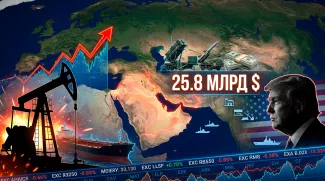
Popular indignation deepens and grows louder when public statements from Washington portray Venezuela not as a sovereign country, but as a space subordinated to foreign geopolitical interests. Recently, former President Donald Trump claimed that revenues from Venezuelan oil would have been sufficient to pay "25 times" the cost of a war against Iran, presenting the energy relationship with Venezuela as little more than a profitable operation for the United States. In earlier statements, Trump even spoke openly of "taking the oil" and compared the Venezuelan case to scenarios of strategic energy control in the Middle East.
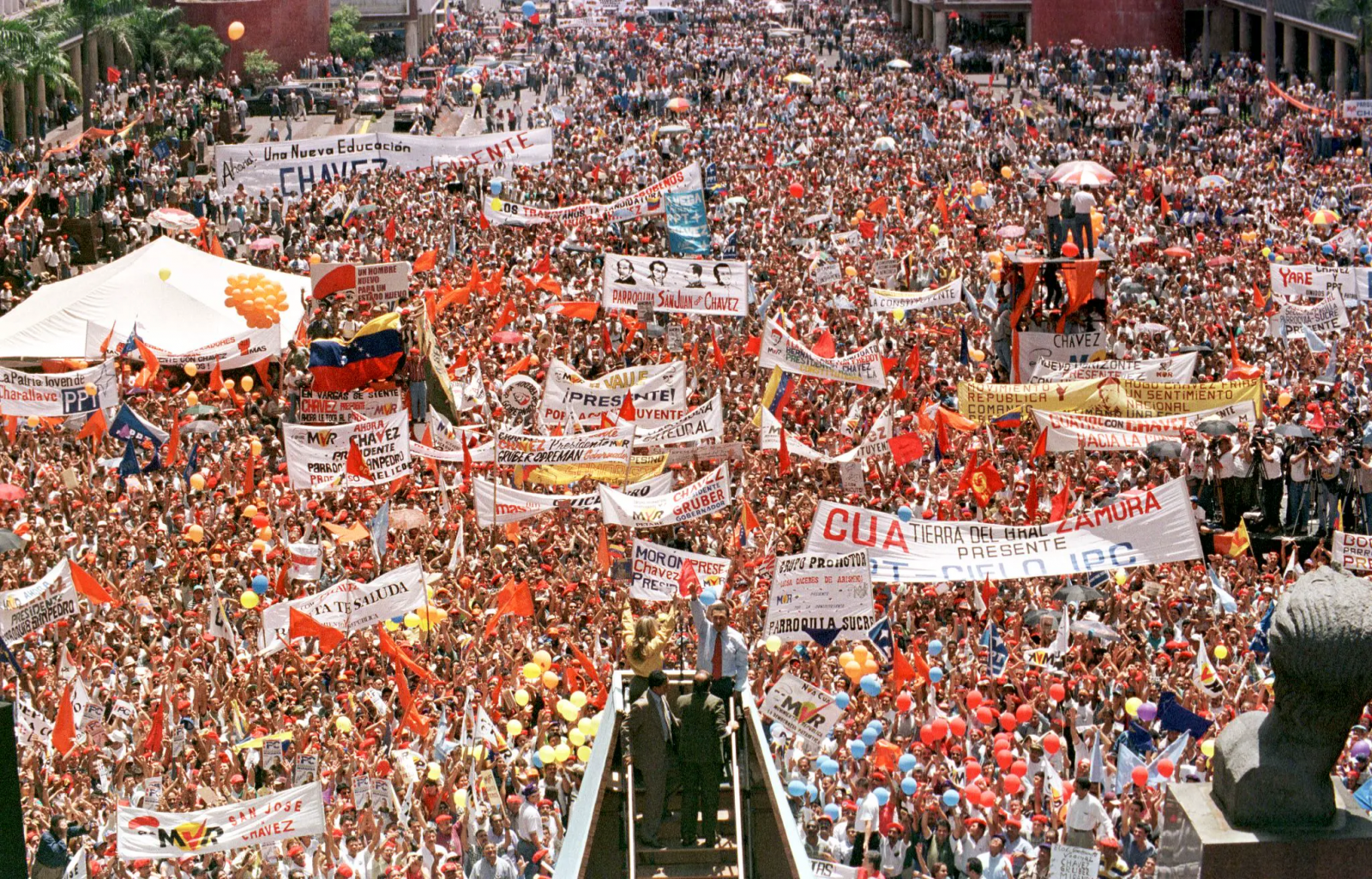
Beyond Trump's provocative rhetoric and personal style, the political content of those words carries enormous historical gravity. When a former American president speaks of Venezuelan oil as economic compensation for foreign military conflicts, what is revealed is the persistence of a historical imperial logic: Venezuela continues to be viewed by Washington as a strategic crude oil reserve and a key piece in the scheme of hemispheric domination. For any Venezuelan sovereigntist sector, these declarations amount to a public confession of how great powers continue to regard national resources as geopolitical spoils.
The political problem runs still deeper and more painfully, because the official silence in response to these statements feeds the perception of subordination and weakness on the part of the Venezuelan government. Many citizens today ask themselves how a government that for years made the denunciation of North American imperialism its very reason for being now permits scenarios that would have been unthinkable decades ago. Even under right-wing governments harshly criticized in the past for their closeness to Washington - such as that of Carlos Andrés Pérez - numerous political and social sectors maintain that any sign of foreign strategic presence compromising Venezuela's territorial sovereignty would never have been tolerated with such passivity. The mere possibility of American aircraft landing on Venezuelan soil, or the expansion of mechanisms for direct political influence by the American embassy, would in other historical times have provoked an immediate and unequivocal national response.
This is why fear is growing across broad sectors of the country that Venezuela is drifting toward indirect forms of political and economic tutelage that will irreversibly erode its capacity for sovereign decision-making. Some critical sectors, even within the popular camp, warn that if this institutional deterioration, this opacity in agreements, and this progressive energy dependency continue, even more aggressive mechanisms of subordination could be normalized tomorrow: operational control over key energy resources, financial impositions conditioning social policy, covert military agreements, or even the installation of forms of foreign military presence under any technical or geopolitical pretext. What would once have been considered treason to the homeland and would have generated a firm response from the State is now beginning to be discussed in hushed tones within the ranks of the ruling party itself, while the revolutionary rhetoric for public consumption remains entirely intact.
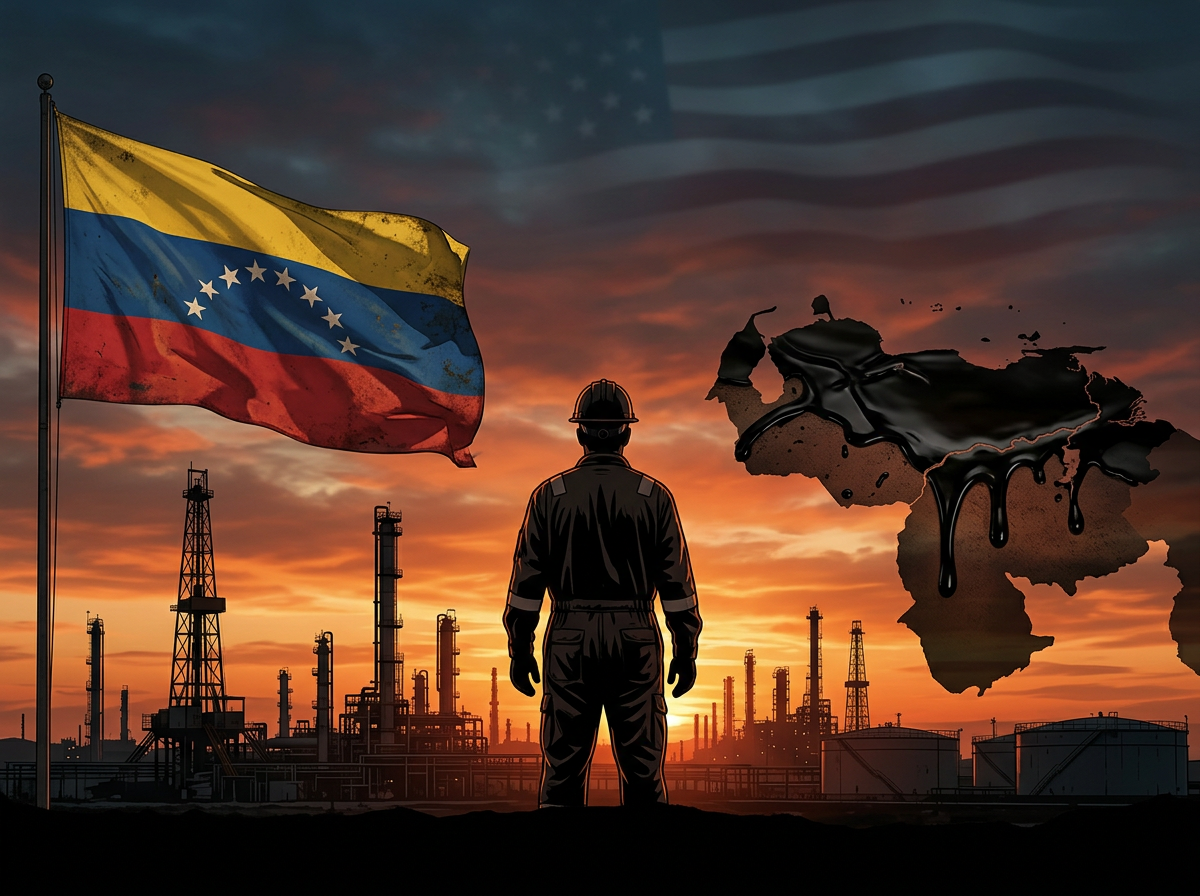
The Venezuelan tragedy is also deeply marked by the merciless persecution of internal critical thought. Those who, from an authentically anti-imperialist position and a genuinely Bolivarian tradition, dare to denounce these contradictions and demand transparency in agreements are immediately disqualified as "traitors," "CIA infiltrators," or "functionaries of imperialism." The State's propaganda apparatus attempts to transform any honest sovereigntist questioning into a political crime in order to silence debate. But the message from critical sectors is clear: remaining silent in the face of the country's progressive surrender is not revolutionary loyalty - it is historical complicity in the plundering of the nation. No true anti-imperialist can accept that the sacred name of Bolívar is used with impunity while relations of economic and geopolitical dependency are normalized, reducing Venezuela to a mere bargaining territory between global and local elites.
Massive corruption plays a central role in this moral collapse of the political project. One cannot seriously speak of revolution while the country was systematically looted by power networks composed of senior officials, state-linked businessmen, financial operators, and oil executives who enriched themselves obscenely during the years of greatest petroleum bonanza - and, worse still, during the years of brutal social collapse that has impoverished the population.
From a coherent sovereigntist and revolutionary perspective, this corruption is not a lamentable excess - it is itself a counter-revolution, a private appropriation of the collective resources of the Venezuelan people beneath the discursive umbrella of the revolution. Therefore, the authentic defense of national sovereignty today demands concrete justice, not more propaganda: real investigation, the opening of archives, trials with guarantees but without guaranteed impunity for those responsible, and the effective recovery of resources stolen from the Venezuelan people. Neither grandiose televised speeches nor selective arrests used as pieces of domestic political propaganda will suffice. Venezuela must dismantle the structures of impunity that have destroyed its institutional credibility and the moral fabric of the nation.
For sovereignty is not defended solely by resisting external pressure from great powers. It is also destroyed from within - when a political leadership transforms state power into a mechanism for personal and group survival; when the revolution is reduced to a privileged bureaucracy enjoying luxuries unimaginable to the people; and when anti-imperialist discourse ends up being cynically wielded as a mask for negotiating quotas of political and economic control behind the nation's back.
Many of us Venezuelans feel today that the nation has been trapped between two suffocating forms of domination: the historical pressure of foreign powers with an interest in oil, and a domestic leadership incapable of upholding genuine principles of independence, sovereignty, and national self-determination in practice. That devastating combination breeds despair, cynicism, and social fracture. Yet it also opens a necessary and urgent debate about the country's future: reclaiming the concept of sovereignty beyond hollow slogans. True anti-imperialism does not consist of repeating catchphrases while silently negotiating the fate of the country's strategic resources. It consists of defending national independence - against any foreign power, and against any domestic elite willing to mortgage the homeland in order to preserve its privileges of power. Venezuela does not need propaganda. It needs truth, historical memory, justice, and national dignity.
THERE IS NOTHING MORE EXCLUSIONARY THAN BEING POOR






.png)
.png)

.png)
.png)